In praise of asking, part one
Answers got cheap, so where does a good question come from? The story starts with a parrot asking “What’s that?” in front of a mirror, and goes on to silent classrooms and an AI that never needs anything.
The asking file · Part One
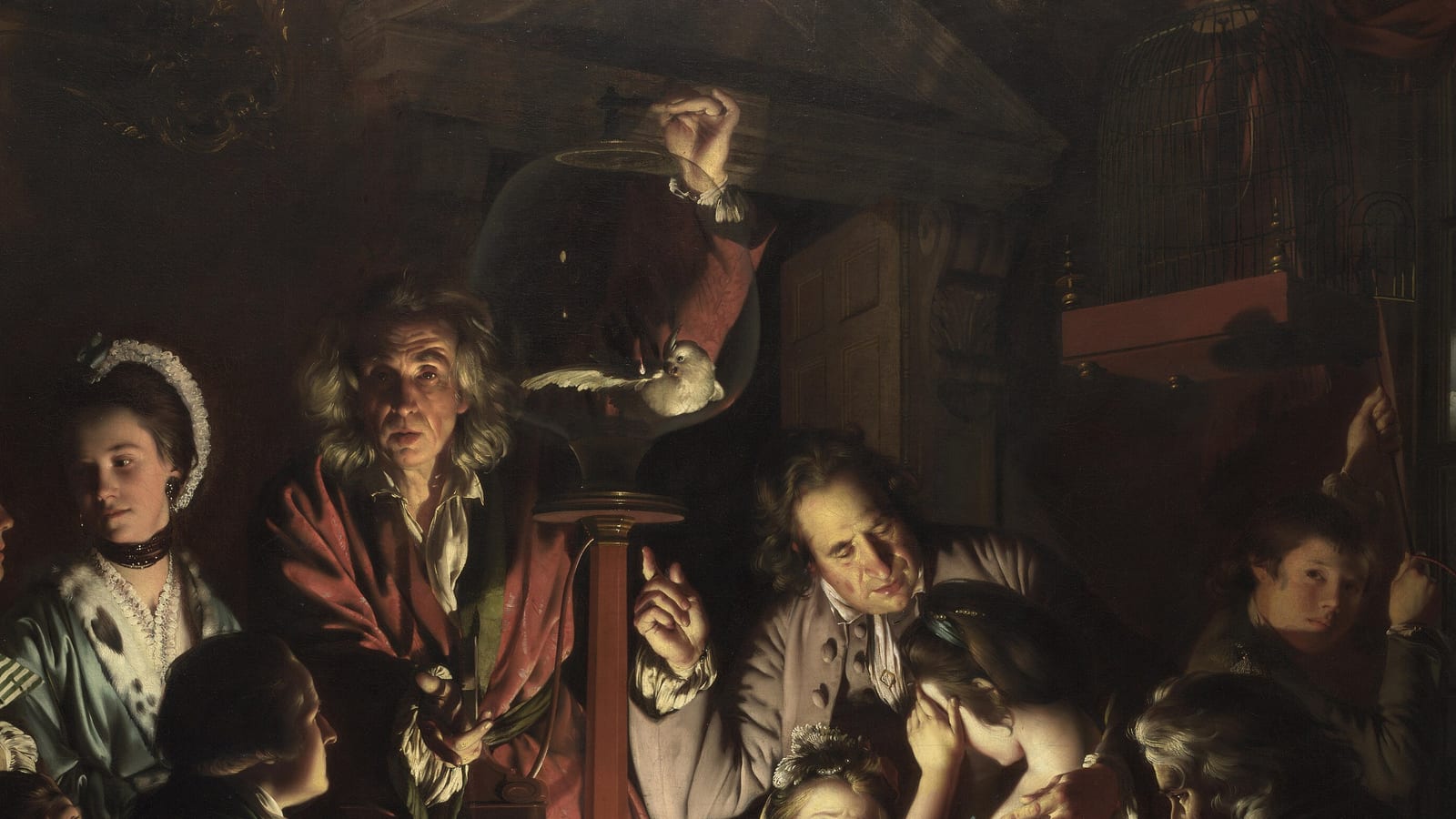
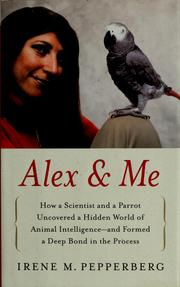
December 1980. Someone at the lab is holding an African grey parrot named Alex in front of the bathroom mirror. Alex looks at his reflection and asks, “What’s that?” Then he asks something else:
“What color?”
They tell him: gray. After hearing it six times, he remembers it. Joseph Jordania, a musicologist who has written a book on where questions come from, counts this as the first question ever asked by an animal and written down by someone.
For that one question, Alex needed three things: thirst, knowing that he didn’t know, and the nerve to turn to someone else. We have all three. So why do children who ask dozens of questions an hour go quiet one day, why do whole societies learn to stay quiet, why do machines ask without any thirst, and why do other animals almost never ask? This essay goes looking for where each of the three comes from.
Cheap answers
Type a question into Google or ChatGPT today, typos and all, and the answer is in front of you in less than a second. Nobody in history has had answers this easy to get. Maybe that’s why we feel a little godlike these days: whatever we want to know is just one bit of typing away.
Kevin Kelly, one of the founders of Wired, put it this way: answers have become cheap and everywhere, and what’s scarce now is a good question. But where does a good question come from in the first place?
A question is a thirst
Put very simply, a question is a need, said out loud! When you’re thirsty, you look for water; when you don’t understand something, you ask. A need is something that forms inside us, a reaction to the situation we’re in.
Nearly 800 years ago, Rumi went a step further. Don’t go looking for water, he says. Go looking for thirst:
Do not seek the water, get thirst,
so that the water may gush forth from above and below.
Philosophers saw this early too. In the Metaphysics, Aristotle says philosophy begins in wonder, and that someone who is puzzled actually sees himself as ignorant. And once you find the answer, the wonder is over: a person who knows geometry is no longer amazed by the thing that once puzzled him. About 2,200 years later, the American philosopher Charles Sanders Peirce said the same thing in more down-to-earth terms. Doubt is an irritation, and we struggle to get rid of it: “The irritation of doubt causes a struggle to attain a state of belief. I shall term this struggle inquiry.”
Psychologists got there much later. In the 1960s, a Canadian psychologist named Daniel Berlyne was one of the first to ask seriously what curiosity is. For two decades after that, most research only asked who is more curious, and measured curiosity like a personality trait.
In 1994 George Loewenstein, a behavioral economist at Carnegie Mellon University, put all that work side by side and noticed that none of it explained something simple: why is curiosity so intense, why does it pass so quickly, and why is getting the answer sometimes a letdown?
His answer was that curiosity is a kind of deprivation. It’s the feeling you get when you notice a gap between what you know and what you want to know. Just like hunger, except the food is information. And his most interesting prediction was that a little information makes curiosity grow, because it’s what shows you the gap in the first place. Loewenstein’s work was only a theory, though; the experiments came years later.
In 2014 Matthias Gruber and his colleagues at the University of California, Davis wanted to know whether curiosity does to memory what an outside reward like money does. They put 19 people in a brain scanner, one at a time, and showed them trivia questions; some made them curious, some didn’t. Each time, the answer took a few seconds to arrive, and during that wait a stranger’s face flashed on the screen, a face with nothing to do with the question.
About an hour later, without warning, they gave everyone a test. Out of every ten answers that had made them curious, they remembered about seven; for the rest, only about five. In the brain, curiosity lit up the same reward circuits that respond to food and money. Stranger still, they also remembered the unrelated faces from the waiting period a little better, as if a curious mind holds on to whatever passes in front of it while it waits. That’s 19 people and a stack of trivia questions, though; whether the same goes for the curiosity of real life, the study can’t say.
Knowing that you don’t know
But thirst on its own isn’t enough. You have to know you’re thirsty.
The line people attribute to Socrates, “All I know is that I know nothing,” doesn’t appear in that form anywhere in Plato. What Socrates says at his trial is subtler: “I neither know nor think that I know.” Socrates wasn’t claiming ignorance; he knew where his knowledge ran out.
In another dialogue, the Meno, Plato has Meno, Socrates’ partner in the conversation, raise an old puzzle. You don’t search for what you know, because you already know it. And you can’t search for what you know nothing about: you don’t know what to look for, and even if you found it, how would you know it’s the thing? Socrates calls this a debater’s trick. Plato’s own answer is strange: learning is really recollection, because our souls have seen everything before. But you don’t have to accept that answer to learn something from the puzzle itself: a question is born where you know something, but not everything.
Partway through the conversation, Meno gets fed up and tells Socrates he’s like the electric ray, the flat fish that numbs anyone who touches it. Socrates doesn’t deny it. To show that searching is possible, he calls over a young slave boy and asks him a geometry problem. The boy confidently gives a wrong answer, then gets stuck. Socrates says the boy is better off now: before, he thought he knew; now he knows he doesn’t, and for the first time he wants to look. Then Socrates says something that could be this series’ motto: if we believe we ought to search for what we don’t know, we’ll be better and braver and less idle.
Socrates’ lesson to the slave boy
Doubling the side quadruples the area; the answer is on the diagonal
- 1First guess: double the side
- 2Second guess: side 3
- 3Answer: the square on the diagonal
We have a square with side 2; its area is 4 cells. We want a square twice as big, so 8 cells. How long is its side?
Meno’s puzzle is philosophical, and no scanner will solve it. But a modern experiment fits the intuition behind it surprisingly well. In 2009 a group of researchers at the California Institute of Technology, Loewenstein among them, wanted to see what the “gap” theory looks like in the brain. They put 19 Caltech students in a scanner and showed them trivia questions. For each one, the students first had to guess the answer in their heads and then report two things: how curious they were to know the answer, and how confident they were that their guess was right.
Curiosity peaked when people were roughly half sure. When they had no guess at all, or when they were sure, curiosity was low. In follow-up experiments with other students, people were willing to spend tokens or wait longer to see the answers to the questions that made them more curious, and when they were quizzed again 11 to 16 days later, they remembered those answers better, especially the ones they’d guessed wrong at first.
The curiosity curve
We’re most curious when we half know the answer
You have no guess; you don’t know what to look for.
The German philosopher Hans-Georg Gadamer packed all of this into one sentence: “In order to be able to ask, one must want to know, and that means knowing that one does not know.” And here’s the funny part: the people who are best at this haven’t even started school yet.
Children and silence
For years, developmental psychologists pictured the child as a little scientist discovering the world alone: touching, dropping, breaking and learning. Michelle Chouinard had a different question. If children ask so many questions, maybe asking is one of their main tools for growing up: a way to get exactly the information they need, from adults, at exactly the moment they’re ready for it.
To find out, she read through transcripts of hours of recorded conversations between four children aged one to five and the adults around them, line by line, and counted their questions. The average: 76 real questions an hour, questions the child actually wanted answered. That’s more than one a minute! And when the answer didn’t help, they asked again. In another part of the same study, 68 parents logged their children’s questions in a diary; even children who couldn’t talk yet were asking questions with gestures and sounds.
To get a feel for 76 an hour, here’s a count that started the moment you opened this page:
Meanwhile, at a child’s pace
A small child asks a real question about every 47 seconds
This awareness of not knowing shows up even before words. In 2016 in Paris, three researchers wanted to know whether a child who can’t talk yet can tell that it doesn’t know something, a question psychologists had argued about for years. In front of 80 babies, all 20 months old, they hid a toy in one of two boxes. Sometimes the child saw where it went; sometimes a screen blocked the view. After a few seconds the child had to point to where the toy was, and before pointing could ask a parent for help, without words.
The children asked for help exactly when the task was harder: when the screen was up, or when the wait was longer. Without a single word, they knew they didn’t know. Still, about a third of the children never asked for help at all. Why, the experiment doesn’t say; maybe shyness, maybe they never doubted themselves in the first place.
Children learn something else early, too: whom to ask. In 2012 two researchers in London, Katarina Begus and Victoria Southgate, wanted to know why babies point at things. Is it just to get an adult’s attention, or to get information out of them? They sat 16-month-olds with two kinds of adult: one who named familiar toys correctly, and one who gave them made-up names. Then they brought out new toys. The babies pointed at the new toys much more in front of the “knowledgeable” adult. They could barely talk yet, but their pointing was already a question: a hand reaching out toward another mind.
But somewhere, that voice fades. In 1970s Britain there was a common belief: working-class children fall behind at school because their homes are linguistically “poor,” and nursery schools and teachers have to make up the difference. Two English researchers, Barbara Tizard and Martin Hughes, set out to test it. They clipped small microphones to the clothes of 30 girls, all nearly four years old, half from working-class families and half from middle-class ones, and recorded them once with their mothers at home and once with their teachers at nursery school.
The result was the opposite of what people expected, at least for these 30 girls, recorded nearly 50 years ago. At home the girls asked far more questions, and in chains: question after question after question, something that almost never happened at nursery school. The gap between working-class and middle-class homes was also much smaller than anyone had assumed. At nursery school, the one asking questions was mostly the teacher, and they were questions she already knew the answers to.
Who asks, and how
At home the questions came in chains; at nursery school, the teacher did the asking
- the child’s question
- an adult’s question
- a follow-up: the next question builds on the answer
Gadamer doesn’t count questions like that as real questions at all, because no one is really asking; a real question is open, and its answer isn’t settled yet. The irony is that Socrates’ famous lesson to the slave boy is full of exactly these questions: Socrates asks, and most of the time the boy just says “Yes, Socrates.” Counts from whole classrooms show the same lopsided picture.
Questions per hour
In class the questions switch sides: the teacher asks, the child goes quiet
Data table
| Group | Questions per hour | Source |
|---|---|---|
| Children aged 1 to 5, with adults | 76 | Chouinard 2007 |
| Teachers, in class | about 120 | Susskind 1979 |
| Pupils, in class | 3 to 4 | Susskind 1979 |
Susan Engel, a psychologist who spent years watching school classrooms, later wrote that many children sit through hours of class without asking a single question. Somewhere along the way, they’d figured out that class wasn’t the place to ask.
The silence doesn’t end with school. We grown-ups don’t raise our hands in class or in a meeting either, because asking means saying in front of everyone that we don’t know. That fear was around 800 years ago, too. In the Gulistan, Saadi tells how the great scholar Muhammad al-Ghazali was asked how he had reached such a rank, and he answered: “By not being ashamed to ask about things I did not know.” Persian has a proverb for it as well: asking is no shame; not knowing is. But if it really weren’t shameful, maybe we wouldn’t have needed a proverb!
A society that goes quiet
In the 1960s an American sociologist named Melvin Kohn and his colleagues interviewed more than 3,000 working American men, a sample meant to stand for the whole country. They asked about their jobs, how closely they were supervised and how complex and varied the work was, and which quality they’d most want a child to have. The answers followed the job more than anything else. Men whose work was taking orders and carrying them out put more weight on obedience; men who made their own decisions put it on thinking for yourself. Without meaning to, parents prepare their children for the same work they do every day.
This link is strong enough that political scientists use it as a measuring stick. To find out how inclined someone is toward authoritarianism, they don’t ask about politics directly. They ask which a child needs more: curiosity or good manners?
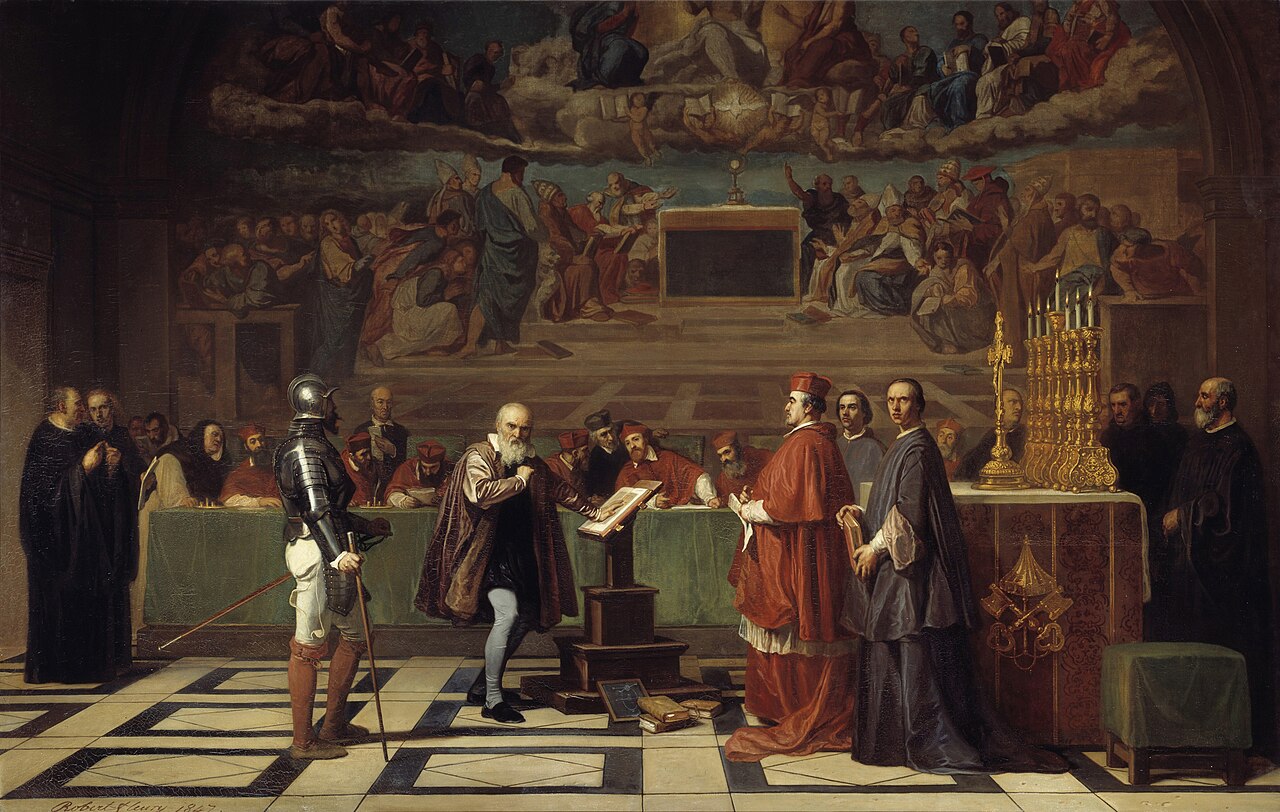
History also shows us places where the cost of a question stopped being a statistic. In 1633 the Inquisition forced Galileo to take back what he’d said, and he spent the rest of his life under house arrest. Three hundred years later in the Soviet Union, Nikolai Vavilov, one of the greatest geneticists of his time, spent years fighting Trofim Lysenko, a biologist backed by Stalin. Vavilov was arrested on August 6, 1940, and died in prison on January 26, 1943. Five years later, genetics was effectively banned in the Soviet Union, and Lysenko’s theories made the food shortages worse. When asking is forbidden, the asker isn’t the only one who pays.
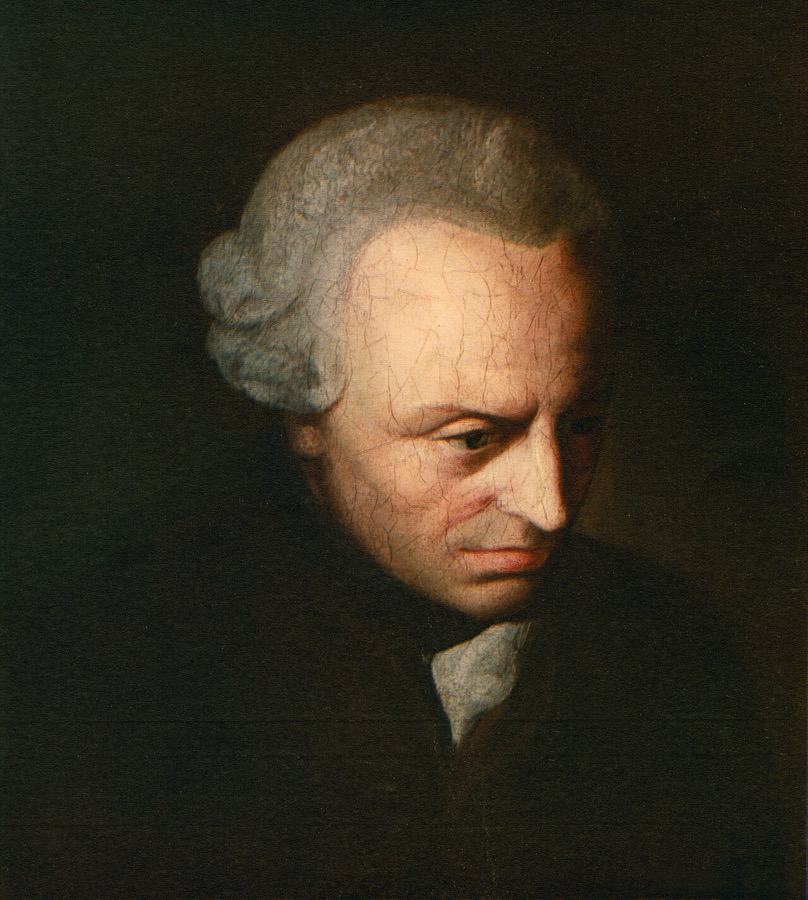
The Enlightenment’s answer to this fear came from Immanuel Kant. In 1784 he wrote that enlightenment is our way out of an immaturity we brought on ourselves, one whose cause is a lack of courage: the courage to use your own understanding without someone else’s guidance. And then two Latin words: Sapere aude! Dare to know. Kant is defending asking about what other people say, even when the other people are a book or a doctor; letting them decide for you was, to him, that same immaturity.
Two centuries later the idea turned up in offices. In 1999 Amy Edmondson, of Harvard Business School, studied 51 work teams at a manufacturing company and found that teams whose members felt safe asking questions and owning up to mistakes learned more: they sought more feedback and talked more openly about errors. It’s a correlation across those 51 teams, and it can’t say which came first.
So what keeps us quiet is fear: fear for our standing, and fear of power. And that raises a serious question. If fear were the only thing stopping us from asking, then machines, which fear nothing, should be the best askers in the world.
A machine that never gets thirsty
ChatGPT isn’t afraid of anything, but it never gets thirsty either. If asking comes from need, can a machine that never gets thirsty ask at all?
Wait a second, though. Didn’t ChatGPT ask me, just yesterday, “Which one do you mean?”
It did, and the honest answer is more complicated than a plain “no.” Since the early 1990s, AI researchers have built machines that get rewarded for shrinking what they don’t know, a kind of “artificial curiosity” that pulls the machine toward the unfamiliar. ChatGPT’s questions aren’t random either: researchers explicitly train language models to ask a question when a request is ambiguous, one that leads to a better answer.
The machine asks because it was built to ask. Philosophers are still arguing about whether that kind of “wanting” is real; and to be honest, our own curiosity was “designed” by evolution too.
In my view the difference is still there, though I’m not sure for how long. The question ChatGPT asks is a tool for giving us a better answer. It doesn’t want to know anything itself, and it never wakes up in the middle of the night to check how that thing turned out. Peirce once wrote, “Let us not pretend to doubt in philosophy what we do not doubt in our hearts.” A machine’s question may be something like that: it has the shape of a question, without the itch.
So the machine asks without thirst. What about the reverse? A creature that has the thirst, but that nobody has taught to ask.
What about animals?
Animals are exactly that. They have needs, like us. They get hungry, get scared, look for a mate. And for all of it they communicate: with sounds, body language, chemical signals, even touch.
When a honeybee finds flowers, it goes back to the hive and does a strange dance. The angle of the dance tells the others which way the food is, and its length tells them how far. That discovery won Karl von Frisch a Nobel Prize in 1973.
The bee dance
A bee reports the direction and distance of a flower with a dance on the wall of the hive
The bee dances at 40° from straight up, and the waggle part of its dance lasts about 1.2 seconds.
Vervet monkeys have a language of their own, too. Until the 1970s, many scientists thought animal calls only expressed feelings, like a scream of fear, and didn’t point to anything in particular. In Kenya, Robert Seyfarth and Dorothy Cheney recorded these monkeys’ alarm calls and then played them back from a hidden loudspeaker, with no predator anywhere around. At the leopard alarm, the monkeys ran up into the trees; at the eagle alarm, they looked up at the sky; at the snake alarm, they looked down at the ground. Young monkeys at first gave the eagle alarm for lots of birds and got more precise as they grew up. Every call was a piece of news.
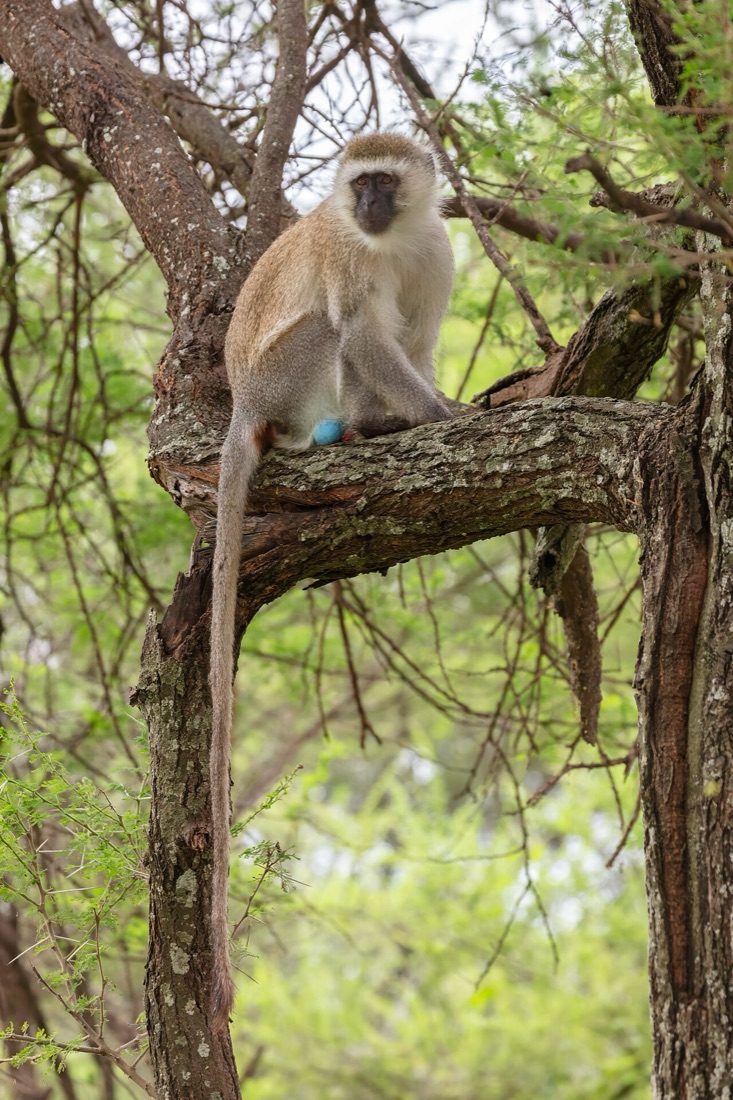
But all these messages are news, not questions. No bee asks “Where are the flowers?” and no monkey asks “What was that noise?”
Even when scientists spent decades teaching chimpanzees and bonobos sign language and symbols, most of what these apes said were requests: give food, let’s play. Whether they ever asked a question at all is still debated; some researchers count a few cases as questions, and some don’t.
And then there’s Alex. Irene Pepperberg worked with him for about 30 years, and Alex learned more than 100 words. Maybe that’s why he could ask. Alex was standing in exactly the middle ground that Meno’s puzzle points to: he knew enough colors to realize there was one he didn’t know.
Alex’s colors
Alex knew enough colors to notice the one he couldn’t name
“What color?” “Gray.” After hearing it six times, the seventh name stuck.
The mirror
December 1980, the same bathroom mirror. Alex saw a gray image and didn’t know its name. He was thirsty, he knew he didn’t know, and he turned to the person standing next to him.
That turn takes what Kant called courage. The asker pays for it, sometimes, like Vavilov, with his life; the answer, once found, belongs to everyone.
Isidor Rabi, a physicist who later won the Nobel Prize, used to tell how in Brooklyn the other mothers would ask their kids when they came home from school, “Did you learn anything today?” His mother asked a different question:
“Izzy, did you ask a good question today?”
Further reading
 Plato: Complete WorksPlato, ed. John M. Cooper, 1997
Every dialogue in one volume (Hackett). The Apology, Crito and Phaedo tell the trial and death of Socrates; the Meno is the puzzle and the slave boy from this essay.
- What is Enlightenment?Immanuel Kant, 1784
A few short pages, and still one of the best texts on the courage to think. English text.
 Truth and MethodHans-Georg Gadamer
The chapter on the hermeneutic priority of the question: heavy going, but the most precise text on what asking means.

 The InevitableKevin Kelly, 2016
The “Questioning” chapter, on what a question is worth in a world of cheap answers.
Sources and notes
- Alex and the mirror: Steven M. Wise, Drawing the Line (Perseus, 2002), p. 107; as cited in Wikipedia: Alex (parrot). The primary source for this story in Pepperberg’s own writing was not checked.
- “An animal’s first question”: This claim comes from Joseph Jordania, Who Asked the First Question? (Logos, 2006). Another parrot named Apollo has reportedly asked the same questions, but the evidence is YouTube videos, not peer-reviewed research.
- Cheap answers: Kevin Kelly, interview with On Being, 2018: The Universe Is a Question.
- Rumi’s couplet: Rumi, Masnavi, Book III, verse 3212 (Nicholson’s numbering), in R. A. Nicholson’s translation. Ganjoor.
- Berlyne: D. E. Berlyne, Conflict, Arousal, and Curiosity (McGraw-Hill, 1960).
- The gap theory: George Loewenstein, “The psychology of curiosity: A review and reinterpretation,” Psychological Bulletin 116(1), 1994, pp. 75–98. PDF.
- Curiosity and memory: Gruber, Gelman & Ranganath, “States of curiosity modulate hippocampus-dependent learning via the dopaminergic circuit,” Neuron 84(2), 2014, pp. 486–496. PMC. 19 participants; answers recalled 70.6 versus 54.1 percent.
- Socrates’ line: Plato, Apology, 21d (Jowett’s translation). Perseus.
- Aristotle’s wonder: Aristotle, Metaphysics, Book I, 982b and 983a; and Plato, Theaetetus, 155d.
- Doubt and inquiry: Charles S. Peirce, “The Fixation of Belief,” Popular Science Monthly 12, 1877; and “Some Consequences of Four Incapacities,” Journal of Speculative Philosophy 2, 1868 (on pretended doubt).
- Meno’s puzzle, the electric ray and the slave boy: Plato, Meno, 80a to 86c; recollection at 81c–d, “better and braver” at 86b–c. Perseus.
- The curiosity curve: Kang, Hsu, Krajbich, Loewenstein, McClure, Wang & Camerer, “The wick in the candle of learning,” Psychological Science 20(8), 2009, pp. 963–973. SAGE. Nineteen Caltech students in the scanner; 16 others in the memory follow-up (11 to 16 days later); 30 more in the token and waiting experiment.
- Gadamer’s sentence and the open question: Hans-Georg Gadamer, Truth and Method, Part II, “The hermeneutic priority of the question”; in the same place he separates the teacher’s question and the rhetorical question from the real one. German original: “Um fragen zu können, muß man wissen wollen, d.h. aber: wissen, daß man nicht weiß.” Stanford Encyclopedia of Philosophy.
- 76 questions an hour: Michelle Chouinard, “Children’s questions: A mechanism for cognitive development,” Monographs of the Society for Research in Child Development 72(1), 2007. PubMed. The 76 figure is for information-seeking questions; the figure of 107 that is sometimes quoted could not be confirmed.
- 80 babies, all 20 months old: Goupil, Romand-Monnier & Kouider, “Infants ask for help when they know they don’t know,” PNAS 113(13), 2016. PMC. The children in the experimental group had first been taught to ask for help by looking at their parent.
- Home and nursery school: Barbara Tizard & Martin Hughes, Young Children Learning (1984); and the same group’s 1982–1983 papers (PubMed). The “26 questions an hour at home and 2 at school” figures that are sometimes quoted could not be confirmed in the original source and are not used here.
- Classrooms without questions: Susan Engel, “Children’s need to know: Curiosity in schools,” Harvard Educational Review 81(4), 2011, pp. 625–645. ERIC. Engel’s own classroom counts were informal. The classroom figures in the chart are from Susskind (1979), as cited by ASCD.
- Ghazali’s story: Saadi, Gulistan, Chapter 8, story 78. Ganjoor. English wording from the Rehatsek translation, Internet Classics Archive.
- Parents’ jobs: Melvin Kohn, Class and Conformity: A Study in Values (University of Chicago Press, 1969). The national survey was a representative sample of more than 3,000 employed American men.
- Curiosity or good manners: Stanley Feldman (2003) and Karen Stenner, The Authoritarian Dynamic (2005); reviewed in PMC.
- Galileo’s trial: The court’s sentence, June 22, 1633. Famous Trials.
- Vavilov and Lysenko: Britannica: Nikolai Vavilov; and Valery Soyfer, Lysenko and the Tragedy of Soviet Science (1994). Saying Lysenkoism “caused” famine is an exaggeration; the sources say it at least made the shortages worse.
- Dare to know: Immanuel Kant, “Beantwortung der Frage: Was ist Aufklärung?”, Berlinische Monatsschrift, written September 30, published December 1784. English translation.
- Psychological safety: Amy Edmondson, “Psychological Safety and Learning Behavior in Work Teams,” Administrative Science Quarterly 44(2), 1999, pp. 350–383. SAGE. A field study of 51 teams in one manufacturing company; the results are correlations.
- Artificial curiosity: Jürgen Schmidhuber, “Formal Theory of Creativity, Fun, and Intrinsic Motivation (1990–2010),” IEEE TAMD 2(3), 2010; and Pathak et al., “Curiosity-driven Exploration by Self-supervised Prediction,” ICML 2017. arXiv.
- Models that ask questions: Andukuri et al., “STaR-GATE,” 2024 (arXiv); Zhang, Knox & Choi, “Modeling Future Conversation Turns to Teach LLMs to Ask Clarifying Questions,” ICLR 2025 (arXiv).
- The bee dance: Karl von Frisch, Nobel Prize in Physiology or Medicine 1973, shared with Konrad Lorenz and Nikolaas Tinbergen.
- Vervet alarm calls: Seyfarth, Cheney & Marler, “Monkey responses to three different alarm calls,” Science 210, 1980, pp. 801–803. Link. For later critiques: Price et al., Scientific Reports, 2015 (Link).
- Apes and questions: Terrace et al., “Can an ape create a sentence?”, Science 206, 1979; Lyn et al., “Nonhuman primates do declare!”, 2011; and for researchers who dispute the “never” claim: Snopes, 2024.
- Alex’s vocabulary: The Alex Foundation: “more than 100 vocal labels.”
- Alex’s seven colors: “A parrot learns to count, after a fashion,” Times Higher Education, April 19, 1996 (Link): rose (red), green, yellow, blue, grey, orange and purple. Wikipedia: Alex (parrot) also gives seven colors. The order he learned them in, and which he knew by December 1980, was not checked, so the palette graphic is illustrative.
- Babies’ pointing: Begus & Southgate, “Infant pointing serves an interrogative function,” Developmental Science 15(5), 2012, pp. 611–617. Birkbeck.
- Rabi’s mother: Letter from Donald Sheff to the New York Times, January 19, 1988. This is Rabi’s memory as told by someone else. Wikiquote.